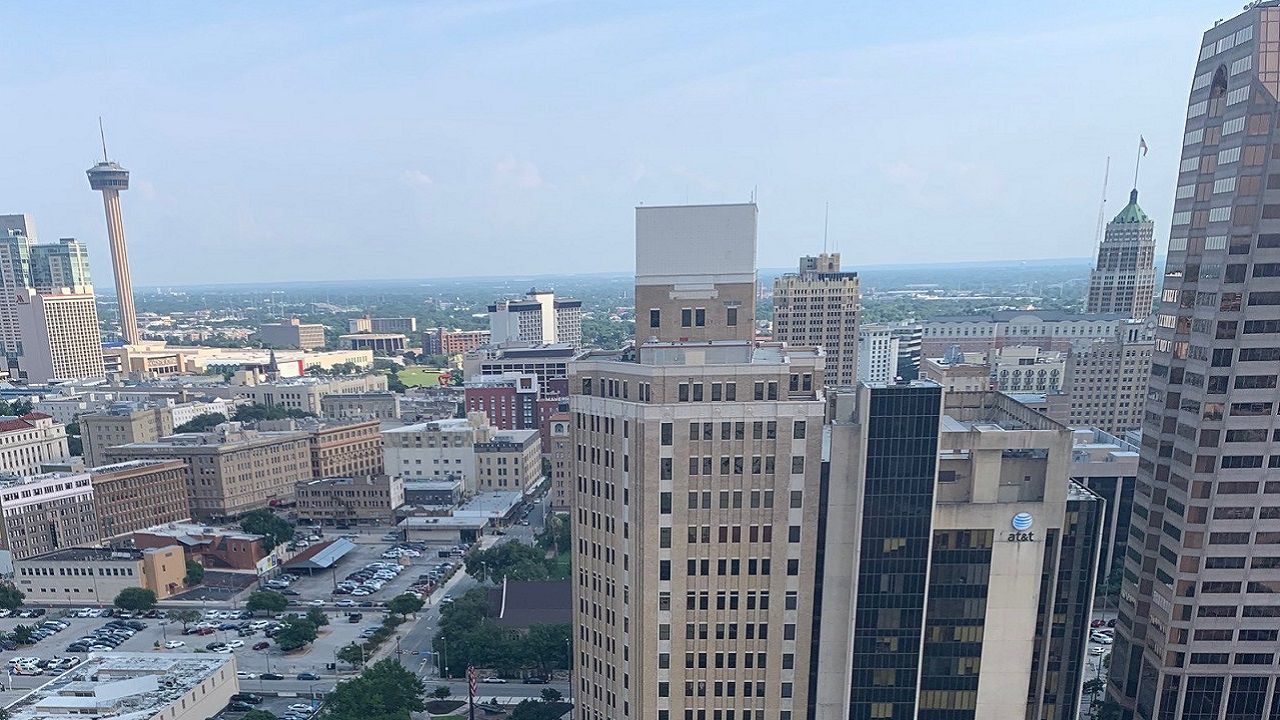
A major player in the booming build-to-rent housing space that recently moved its headquarters to San Antonio is expanding its leadership team amid explosive growth.
Category: San Antonio News
This category is for general business news stories local to San Antonio.
San Marcos man on Hays County Most Wanted list arrested
A 58-year-old San Marcos man who was on the Hays County Crime Stoppers Most Wanted list has been arrested.
According to a news release, Robert Bernal was arrested Tuesday evening at a home in San Marcos by Hays County Sheriff’s deputies.
Bernal was added to the Hays County Most Wanted list for a warrant on a charge of aggravated assault of a child, authorities said.
He was arrested after Hays County Crime Stoppers received information that Bernal was at a home in San Marcos. Deputies said within 15 minutes, Bernal was in custody.
Hays County Sheriff said he wants to remind the public that tips like these could earn up to $1000.00 in reward money, is completely anonymous, and protected by law from even court discovery.
More on KSAT:
Grand jury clears two San Marcos police officers in fatal shooting of 31-year-old manBounty offered in two Texas counties for feral hogs
Inequities persist for San Antonio’s Black community, local report finds
A new comprehensive report led by the San Antonio Area Foundation (SAAF) and the San Antonio Area African American Community Fund (SAAAACF) found that many disparities continue to affect the city’s Black community.
The report, titled “State of the African American community in San Antonio and Bexar County,” came about as the groups sought a deeper analysis to show the challenges that Black residents face in Bexar County. Black residents make up about 7% of the overall population.
In many ways, the first-of-its-kind report found the disparities that exist in income, home ownership and criminal justice follow national trends. SAAAACF Chairman Bobby Blount said the findings should be a call to action.
“This report does more than validate what most of us know: African Americans face many challenges in our community,” Blount said. “It provides a foundation for everyone to understand, discuss and take action to improve the livelihood of San Antonians.”
Here are some of the key takeaways:
Home ownership
The report found that the Black residents have the lowest rate of home ownership in Bexar County.
The percentage of Black residents who own their home stands at 41.2%, the lowest among other races and ethnicity groups. White home ownership is at 66.1%.
It’s also harder for Black residents to get a mortgage for their homes. The data shows that 37% of Black applicants have seen their mortgage loan applications denied. White applicants saw their applications rejected only 21.4% of the time.
Income
The average income for Black and Latino workers in Bexar County is similar to the county’s overall average but much less than their white counterparts.
“At about $43,000, white per capita income is about one and a half times higher than the county per capita income of $28,000,” according to the report.
Median household income shows a similar disparity. While Black and Latino households have a median income just under $50,000, white household income stands at $73,108.
Another financial statistic cited in the report: “An estimated 19% of Black- or African American- headed households have a household income of $100,000 or greater, as compared to 25% of county households overall and 35% of white households.”
Business
Another stark contrast is apparent in business ownership. Black-owned businesses only make up 1.4% of employer firms — businesses with multiple employees — in the San Antonio-New Braunfels metro area. White-owned businesses make up 61% of the employer firms in the metropolitan area.
The report does cite a lack of local quantitative data on this topic, but notes that local interviews and focus groups conducted for the report cited a number of other barriers, including poor access to credit and capital, as a barrier to business expansion.
Criminal Justice
Though Black residents make up 7% of the population, they make up more than 10% of the traffic stops and roughly 24% of 2019 arrests in San Antonio, the report found.
When it comes to the local cite and release program — which allows officers to issue citations in lieu of an arrest on certain Class A or Class B misdemeanor charges — Black and Latino people are less likely to be released than white people, the report found.
Bail amounts in Bexar County also show a disparity.
“Average bail varies dramatically by defendant race/ethnicity, with the average for Black or African Americans being 1.4 times the average for all groups,” according to the report.
That, in turn, can affect overrepresentation in the Bexar County Jail population.
“In a one-day snapshot of the Bexar County jail population in 2020, Black or African Americans were overrepresented compared to county population by a factor of 3.6 among inmates held for misdemeanor offenses and by a factor of 2.2 among inmates held for felony offenses,” according to the report.
Moving forward
The foundations who led the effort to publish this report say they have already created several initiatives in an effort to address these disparities. They include:
A SAAAACF Social Justice Fund that provides bail and legal aid to those facing low-level offenses.UP Partnership for youth leadership and workforce development grants focused on helping communities of color.SAAFdn has contributed $14 million into programs on education, economic opportunities and social justice.Partnership with the City of San Antonio and Metro Health to address health disparities.
Advocates say more can be done to help San Antonio address these inequities. They include:
Implement alternative methods of traffic law enforcement, including standardizing collection of metrics based on race and ethnicity.Invest in public defense to ensure those unable to retain counsel receive equal representation within the criminal justice system.Expand eligibility requirements for early education programs in order to enable Black children to be more kindergarten-ready.Create more opportunities for Black students to access Advanced Placement courses and gifted and talented programs.Expand paid internships as well as outreach programs to increase African American young adult participation in the workforce.Make more resources available and lift barriers impeding access to credit in order to increase financial stability for low-income African American households.Expand lending and support services to Black small business owners and entrepreneurs.
Read the full report below:

San Antonio state lawmaker wants STAAR test canceled this year, cites omicron surge
A San Antonio state lawmaker is once again taking aim at a state-mandated test that assesses school district and campus performance.
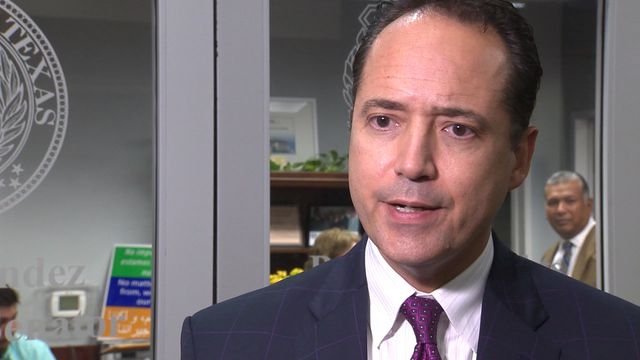
Sen. Jose Menendez on Wednesday sent a letter to Gov. Greg Abbott and Texas Commissioner of Education Mike Morath urging them to cancel the State of Texas Assessments of Academic Readiness (STAAR) test for the current academic year.
Menendez, a Democrat who represents District 26, said with the problems that the omicron surge are causing in schools across Texas for teachers and students, “the last thing our education system needs right now is to take a high-stakes test … with scores that could potentially harm both the student and the school. Given the dire circumstances currently facing our education system, I am requesting you take all necessary action to cancel the administration of the STAAR test for the current academic year,” Menendez said in the letter.
The lawmaker has long been a critic of the test, even before the pandemic. In March 2019, he wrote a letter to Morath, saying that he was going to introduce legislation that would put a moratorium of the test for two years, citing research that indicated the test measures achievement two to three years on above grade level, on average.
Menendez reiterated his criticism in Wednesday’s letter.
“The STAAR test has long been proven to be an unnecessary and poorly designed means of assessment. Studies repeatedly show that it is out of sync with the student learning standards, which only sets them up for failure and places more stress on students and teachers. As unfair as the test is in normal times, it is beyond understanding how this test can be seen as fair assessment while our students, teachers and schools are experiencing the COVID-19 surge. Our office conducted a survey last year that received over 13,000 responses with 97% of Texans opposing taking the STAAR test in-person. Given this recent COVID-19 surge, administering the STAAR test as it is normally conducted would not only put lives at risk but would also produce inaccurate data that would not take into account the disproportionate challenges all Texans have faced not only the past 3 months but through the entirety pandemic,” he said in the letter.
You can read the letter in its entirety below:
Senator Menendez Letter Regarding Canceling the STAAR Test_Final by David Ibanez on Scribd
Related Story:
Texas museum salutes fierce female WWII pilots in soaring new exhibit
When it comes to tales of the Greatest Generation and World War II, most of the stories are relegated to men. But women played a substantial part in the war effort, such as the valiant female pilots known as WASPs. The story of the WASPS — Women Airforce Service Pilots — and their Texas connection is told in “Fly Girls of WWII,” a new exhibit premiering at the Lone Star Flight Museum in Houston. The…
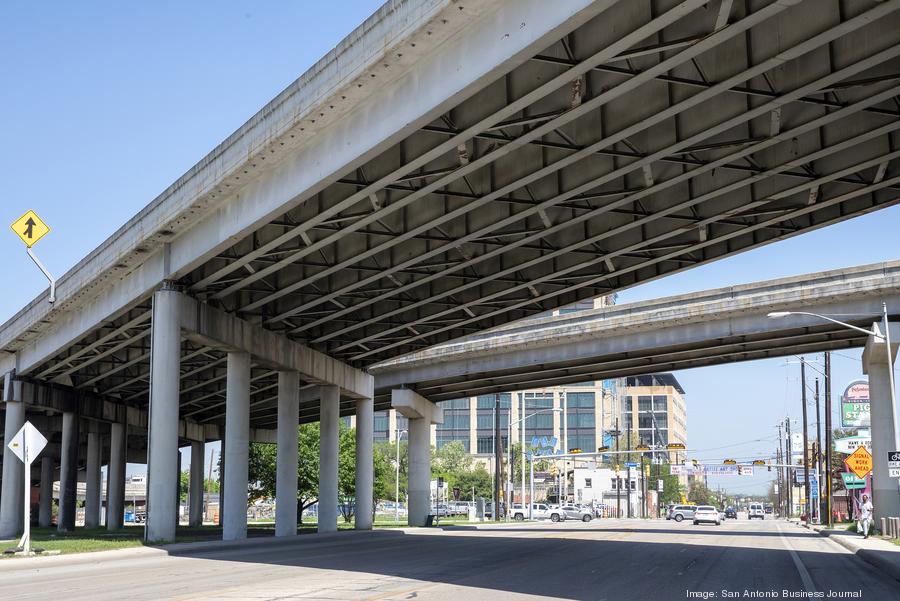
Mayor warns Broadway plan roadblock major threat to new development
Will the state snatch back control of Broadway after turning it over to the city 7 years ago?
SBA launches small-business cybersecurity grant program
A new SBA grant program will help small businesses beef up their cybersecurity. Here’s what businesses need to know.
Partners launch new coffee concept in SA’s King William district
Colibri Mountain Coffee, is at King William mainstay La Tuna Icehouse.
SpaceX Falcon 9 rocket booster will crash into the moon in March, experts say
Reports of a rocket booster from the SpaceX Falcon 9 on course to hit the moon are true, but it’s not anything to be worried about, experts say.
The booster was originally launched from Florida in Feb. 2015 as part of a mission that sent a space weather satellite on a million-mile journey, according to the Guardian.
Seven years later, a portion of the rocket referred to as the “second stage left” is expected to make contact with the moon sometime around March 4.
According to ARS Technica, the rocket’s second stage didn’t have enough fuel to return to the Earth’s atmosphere and was unable to escape the gravity of the Earth-Moon system, which has put it in “a somewhat chaotic orbit since February 2015.”
Center for Astrophysics astronomer Jonathan McDowell confirmed that the second stage left is expected to hit the moon on March 4 and tweeted “it’s interesting, but not a big deal.”
For those asking: yes, an old Falcon 9 second stage left in high orbit in 2015 is going to hit the moon on March 4. It’s interesting, but not a big deal.
— Jonathan McDowell (@planet4589) January 25, 2022
NASA reports that more than 27,000 pieces of orbital debris, or “space junk,” are tracked by the Department of Defense’s global Space Surveillance Network sensors at any given time, however, much more debris that is too small to track exists in the near-Earth space environment.
While those smaller pieces may be too small to track, they’re still large enough to threaten human spaceflight and robotic missions.
Bill Gray, who created Guide astrometry software that tracks Near-Earth Objects, asteroids, minor planets and comets, wrote a blog post on Friday saying the impact could be good for science.
“I am rooting for a lunar impact. We already know what happens when junk hits the earth,” said Gray. “In 2009, a rocket booster was deliberately impacted into the moon in hopes of learning something from the ejecta.”
Gray said from a safety viewpoint — the short version is that people should not be worried at all.
Impact!
It is highly-likely that NORAD 40391, a rocket booster launched many years ago, will impact the Moon on March 4th. Come February, more observations should confirm this.https://t.co/2eBaykJEXX pic.twitter.com/wmI9uYLGYi
— Tony Dunn (@tony873004) January 21, 2022
Girl Scouts of Southwest Texas kick off 2022 cookie season
Thousands of area Girl Scouts are receiving cookies to distribute to customers in San Antonio and 20 surrounding counties.
Last year, they sold more than 1 million boxes of Girl Scout cookies and they expect this year’s sales to be even bigger.
“The girl who sells you that box of cookies gets a portion directly to her troop and the remaining proceeds come to Girl Scouts of Southwest Texas, which helps support all of our council sponsored programs in maintaining our properties for the girls year-round,” Stephanie Finleon Cortez, communications officer, Girl Scouts of Southwest Texas said.
Cars lined up outside a warehouse on the Northeast Side of San Antonio to pick up Girl Scout cookies Wednesday morning.
Christina Reagan came prepared with a moving truck to pick up cookies for her troop.
“These girls have already made their posters. They’ve already got their little signs ready for the booths. They’re so excited,” Reagan said.
Beginning Feb. 4, you will see Girl Scouts selling cookies in front of your favorite neighborhood stores and restaurants.
“We are going to be able to be in front of more neighborhood stores than we were this time last year. Last year, it was all about contactless sports delivery and online sales,” Finleon Corrtez said.
Girl Scouts are learning goal setting, decision making, money management, people skills and business ethics.
Alanna Carmichael was first in line this morning to pick up this year’s new cookie, Adventurefuls.
It’s a brownie inspired cookie with caramel flavored crème and a hint of sea salt.
“My parents tried them. My daughter tried them and they’re in love with them. So, I ordered extras because I know they’re going to go fast,” Carmichael said.
To find a booth location near you, download the Girl Scout Cookie Finder app on iOS or Android or click here.