
Federal COVID-19 drive-thru testing site to open Tuesday at Alamodome

The city of San Antonio will open a federal COVID-19 drive-thru testing site Tuesday at the Alamodome.

The city, through the support of the Texas Division of Emergency Management, will open the testing site at 7 a.m. Tuesday at the Alamodome in Lot C at Cherry Street and Montana. City officials said appointments are required.

The testing site will be open from 7 a.m. to 5 p.m. seven days a week until Feb. 4, according to the city. The site, however, will close on Jan. 22, 28, 29 and 30 for previously scheduled events at the Alamodome.

“Metro Health is grateful to the Texas Division of Emergency Management in working with us to offer an additional COVID-19 testing location to the community. This added support allows the city of San Antonio to address the increased demand for testing due to the rapidly spreading omicron variant,” Metro Health Director Claude A. Jacob said in a released statement. “We would also like to thank our partners at the San Antonio Fire Department for their tireless commitment and assistance, which made this testing site possible in order to further protect residents.”

City officials said Bexar County is one of six counties approved to have a federal testing site established as requested by Gov. Greg Abbott.

The testing site will use a shallow nasal PCR test. City officials said results are anticipated to be returned within 48 hours, and results for tests done Sunday will be provided within 72 hours.

The current testing capacity at the Alamodome is 1,200 tests per day with the option to expand as needed, city officials said.

Click here to register for an appointment or call 800-635-8611.

“Because of the highly contagious omicron variant, Metro Heath encourages individuals to get vaccinated as soon as possible, and, if you are eligible, get a booster for extra protection,” the city’s release said. “Also, if you are experiencing symptoms of COVID-19, please get tested; and if you are sick, stay home.”

Visit covid19.sanantonio.gov or call 311 and select option 8 to find a COVID-19 vaccine pop-up clinic or testing location.


SAWS: Routine testing prevents E. coli bacteria from entering drinking system on North Side

A raw, untreated water sample from a well on San Antonio’s North Side during standard water quality sampling indicated the presence of E. coli bacteria, according to San Antonio Water System.

Officials said the well, located at 6912 West Ave. near NW Military Drive, is part of the former BexarMet system.

SAWS shut down the Castle Hills well immediately based on the test result and will inspect, disinfect and retest before the well is put back into use, officials said.

SAWS said this is not a boil water notice, and that customers do not need to take additional measures prior to consumption.

“We are constantly testing all our water to ensure it is high quality,” Donovan Burton, VP Water Resources & Governmental Relations, said in a released statement. “Finding this result and responding to it demonstrates the safeguards in SAWS system are working the way they should, to ensure safe drinking water is flowing to your home.”

Raw, or untreated water, is water from a well before disinfection and before entering the system providing water to customers. Officials said all raw or untreated water is disinfected before entering the distribution system as finished water for customers.

All drinking water test samples taken from the SAWS water system for December and January to date have been cleared of any evidence of E. coli, according to SAWS.

“Under the Groundwater Rule established by the U.S. Environmental Protection Agency and the Texas Commission on Environmental Quality long ago, SAWS is required to provide public notice if a water well tests positive for E. coli or fecal bacteria,” SAWS said in its release.

Millions in funding slated for Texas bridges, repairs

Texas will receive a half billion dollars to help pay for bridge improvements and repairs, with money coming from the federal infrastructure law. The money is aimed at fixing the bridges most in need of repair.

“It will also modernize bridges to withstand the effects of climate change and to make them safer for all users, including cyclists and pedestrians,” Deputy Federal Highway Administrator Stephanie Pollack said in a statement. “Every state has bridges in poor condition and in need of repair, including bridges with weight restrictions that may force lengthy detours for travelers, school buses, first responders or trucks carrying freight,” she added.

The funding is considered the largest federal investment in bridges since the establishment of the Interstate Highway System in the 1950s. Bexar County has close to a thousand bridges considered in fair condition, according to a database from the Federal Highway Administration. Another seven are considered in poor condition.

At least two of the bridges on the list are slated for repairs in the coming years: I-35 over Eisenhauer Road and Walters Street over the Union Pacific railroad tracks on the East Side.

The Texas Department of Transportation defines bridges in poor condition are “those exhibiting signs of advanced structural deterioration” but not necessarily unsafe.

Texas has more than 800 bridges considered in poor condition and another 26,100 in fair condition.

Have questions about transportation or traffic? Let us know, and your answer may be our next story. Find past answers on our traffic page.

How to turn your unwanted clothing into cash

If this is the year you finally clean out the closet and part with all that clothing that no longer suits you, you have plenty of options to sell, donate or even recycle.

More than nine million tons of clothing ends up in landfills each year, according to the United States Environmental Protection Agency. Not only is that bad for the planet, but it’s also a lost opportunity to make some cash or help others.

Aine Stapleton is cleaning out her closets.

“I’m hoping to get rid of some of these online and sell them for pretty much as close to the original value as I can,” she said.

EBay and Facebook Marketplace are not the only game in town for selling clothing.

“There’s a growing number of digital stores and phone apps tailored to sell anything you want to get rid of,” said Consumer Reports’ Kevin Doyle.

On sites like Poshmark and Vinted, you list your item and name your price. Once sold, you ship it directly to the buyer using a prepaid shipping label.

With thredUP and The RealReal, you send your unwanted items off to be sorted, priced and listed for sale.

“Whether they’re online or in-person, vintage and consignment shops won’t take everything,” Doyle said. “Often it’s because of the condition of the item or it’s out of style. So if you can’t sell it, but it’s still usable, donate.”

Goodwill Industries is one of the best known examples. It collects and sells donations to support education and job placement programs.

Salvation Army, Haven for Hope, Roy Maas Youth Alternatives, Arms of Hope, and Revolution Thrift are a few of the local non-profits that accept gently used clothing.

Dress for Success welcomes gently used professional wear. Check any of the non-profits’ websites for specifics on what they do and don’t take.

Stapleton even found a taker for her old formal dresses.

“Local high schools will often say, ‘We want dresses for students who maybe can’t afford a prom dress,’” Stapleton said.

You can also share and swap with neighbors by using the Freecycle Network or BuyNothing Facebook groups.

Finally, for clothing that just doesn’t have a future in someone’s closet, you can always recycle. Check out Earth911.com to find a textile recycling location.

COVID-19 related hospitalizations top 1,000 in Bexar County, data shows

COVID-19 related hospitalizations have reached a new milestone as the omicron variant continues to surge in Bexar County.

On Friday, the San Antonio Metropolitan Health District reported 1,028 COVID-19 positive patients in local hospitals, an increase of 46 patients from Thursday. There are 214 patients in ICU and 76 on ventilators.

Area hospitals currently have 9% of staffed beds available and 65% of ventilators.

Case numbers did see a decline on Friday, coming in at 3,796, down from 5,781 new cases reported on Thursday.

The 7-day moving average currently resides at 4,765 cases, according to data provided by Metro Health.

ALSO ON KSAT.COM: 5 charts show COVID-19 surge in San Antonio

See more of today’s COVID-19 statistics and city resources for the public here.

City health officials offer the following testing guidelines

Consider using a self-test before joining indoor gatherings with others who are not in your household.A positive self-test result means that you have an infection and should avoid indoor gatherings to reduce the risk of spreading the disease to someone else.A negative self-test result means that you may not have an infection. Repeating the test with at least 24 hours between tests will increase the confidence that you are not infected.Ask your health care provider if you need help interpreting your test results.

Click here to access more information about other city no-cost testing sites.

Also on KSAT:

Here are the COVID-19 vaccine pop-up clinics taking place around San AntonioWhere to get tested for COVID-19 in San Antonio, Bexar CountyWhere to get a COVID-19 vaccine in San Antonio

Large fire destroys 22 storage units on North Side, SAFD says

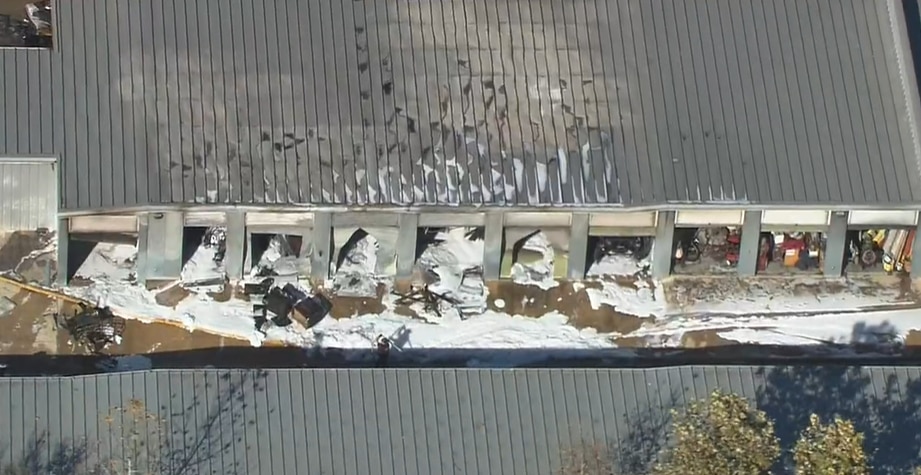
Twenty-two storage units on the city’s North Side were destroyed after going up in flames Friday afternoon, according to the San Antonio Fire Department.

The fire happened at a storage unit facility in the 17800 block of Blanco Road.

According to San Antonio Fire Chief Charles Hood, it’s unclear what caused the fire, but 22 storage units were heavily damaged by the flames. No injuries were reported.

As of around 3 p.m., fire crews were pulling items out of the effected storage units to make sure nothing else is still burning or smoldering.

Hood said the cleanup is “labor intensive” and that HAZMAT crews are also on scene, given that vehicles, pool chemicals, pesticides and other items were found in some of the units that could be hazardous.

The incident has sparked concerns as the city and county await a cold front early Saturday that could pose high fire risks.

Further details are limited at this time. We’ll bring more updates as they become available.

More on KSAT:

Bexar County Fire Marshal warns of high fire risk on Saturday; Gov. Abbott readies emergency responseStrong winds for San Antonio and surrounding areas Saturday

Massive brush fire in south Bexar County draws large emergency response, prompts evacuations

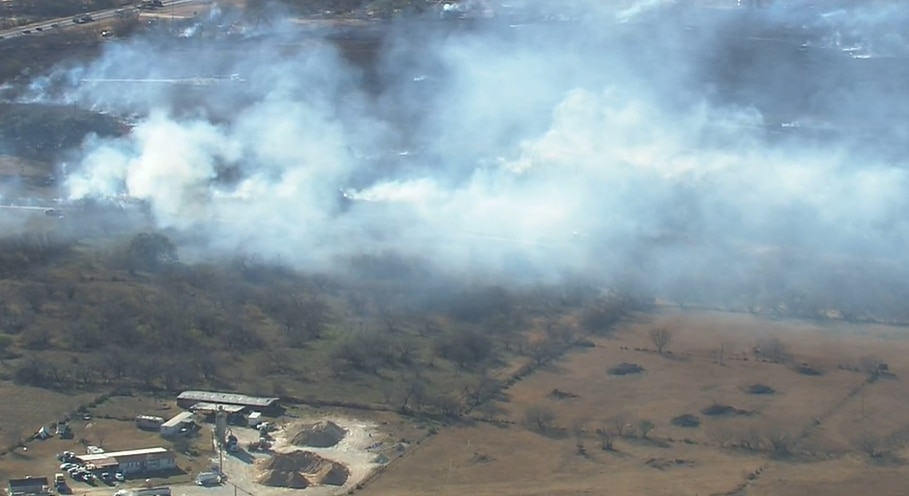
Seventy acres of brush in south Bexar County went up in flames Friday afternoon, drawing a heavy response from area fire crews and prompting residential evacuations.

Multiple agencies are currently working the scene, including the San Antonio Fire Department, JBSA, San Antonio police, and others.

As of around 3:21 p.m., Bexar County Public Information Officer Thomas Peine said the fire is 75% contained. However, crews are racing against the clock to get the fire completely under control before the cold front blows in on Saturday.

The cold front could pose high fire risks, according to officials.

No injuries have been reported and it’s unknown what started the fire.

Officials said the flames do pose a risk to area structures, but so far, no buildings have been burned.

This is a developing story and we’ll bring more updates as they become available.

More on KSAT:

Bexar County Fire Marshal warns of high fire risk on Saturday; Gov. Abbott readies emergency responseStrong winds for San Antonio and surrounding areas Saturday